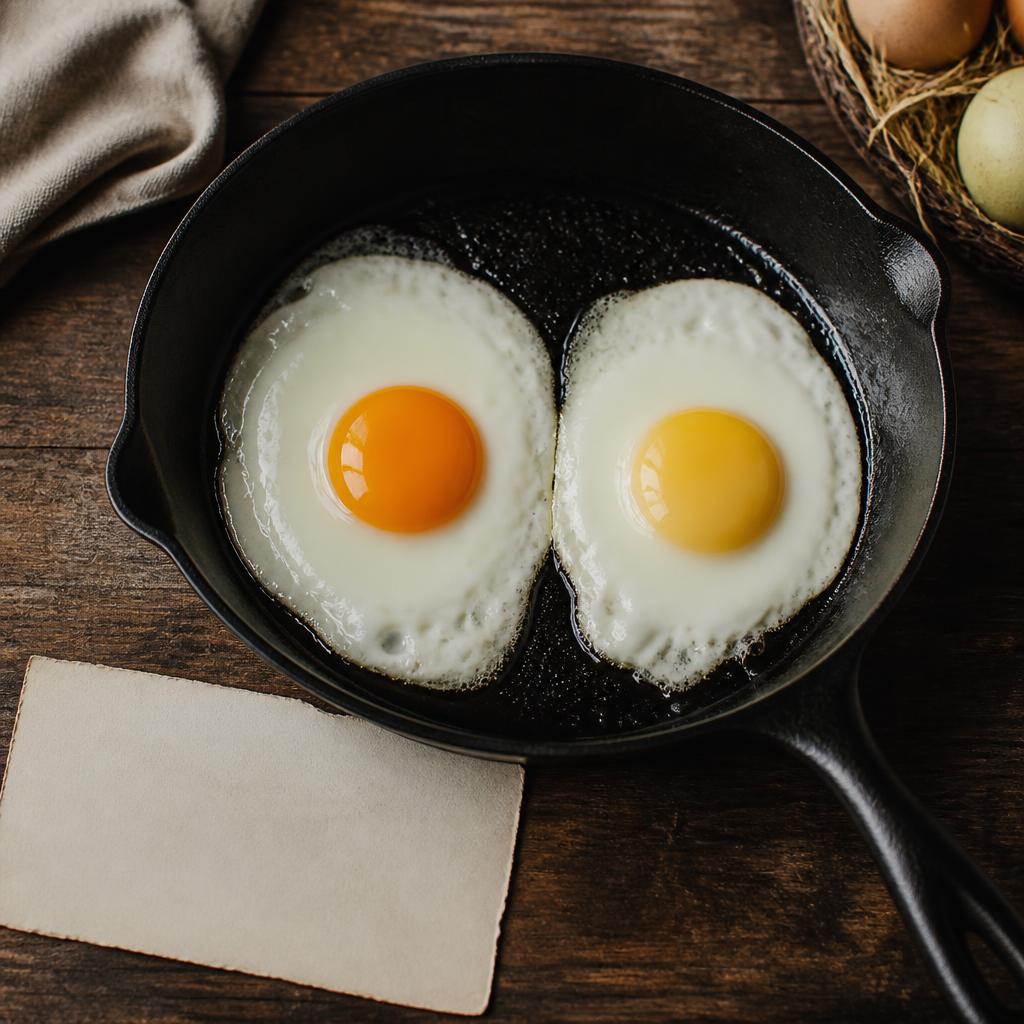
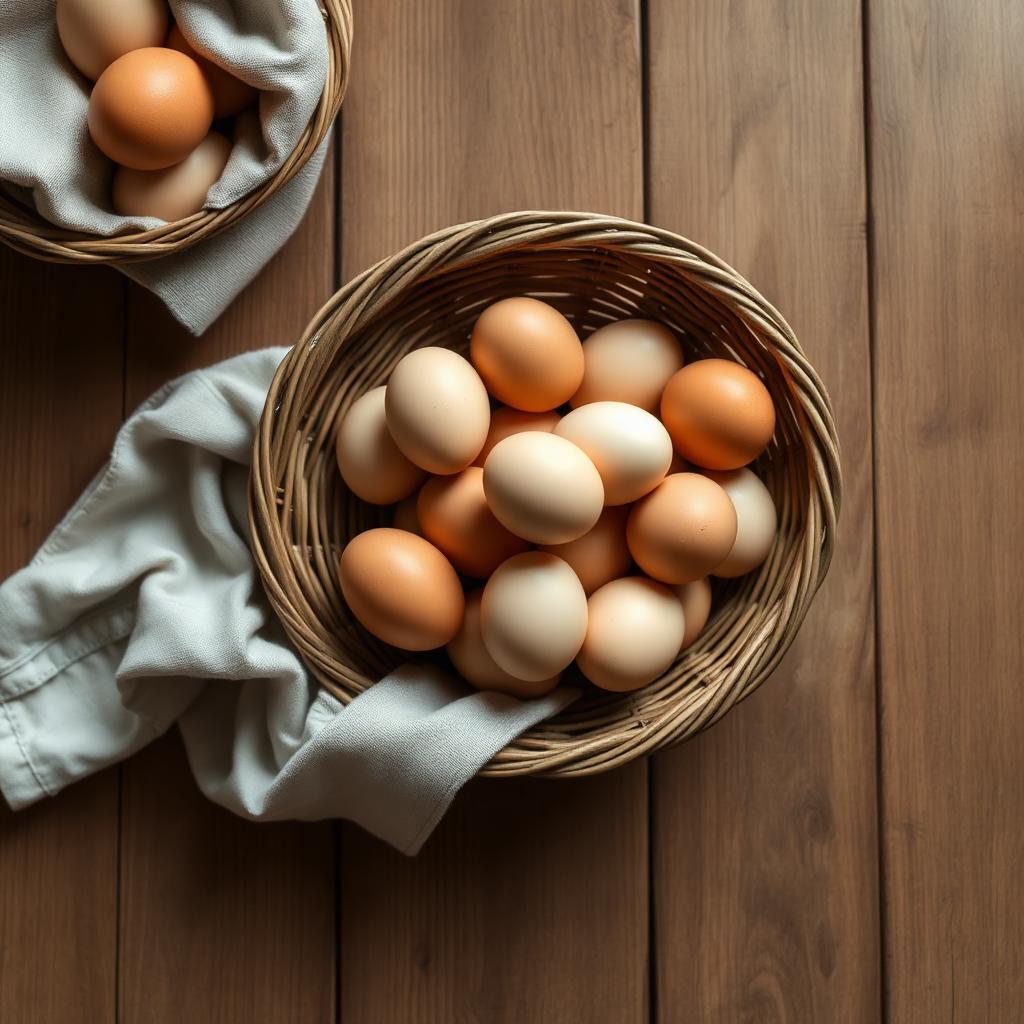
Farm egg yolks are orange because pasture-raised hens eat plants, bugs, and greens loaded with carotenoids. Store hens fed only corn and soy produce the pale yellow yolks most people grew up with.
Yolk color is a diet map
Yolk color is one of the most honest signals of how a chicken was actually raised. Pigments called xanthophylls, a type of carotenoid, come from marigold petals, grass, clover, alfalfa, and the tiny bugs a hen forages in a pasture. Those pigments deposit directly into the yolk.
Feed a hen a beige mash of corn and soy and you get a beige yolk. Let her chase grasshoppers through clover and you get a sunset.
The DSM color fan
Commercial egg producers use a tool called the DSM Yolk Color Fan, which grades yolks from 1 (pale yellow) to 16 (deep red-orange). Most grocery store eggs land around a 6 or 7. Pastured eggs typically hit 12 to 15.
Does color mean more nutrition?
Yes, though the size of the difference is often overstated. Peer-reviewed studies on pastured eggs have found higher levels of vitamins A, D, and E, more omega-3 fatty acids, more lutein and zeaxanthin, and similar total protein and calories.
The most reliable takeaway: a pastured egg is a nutritionally richer egg, and the color is an outward sign of that richness.
Seasonal shifts are normal
Our yolks are darkest in late spring, summer, and early fall when the pasture is green and the bugs are thick. Deep winter yolks are lighter because the birds are relying more on their grain ration and less on foraging. That is not a defect. It is honesty.
Try the color test yourself
Crack one of our eggs next to a store egg. Same pan, same heat. The difference is impossible to unsee.