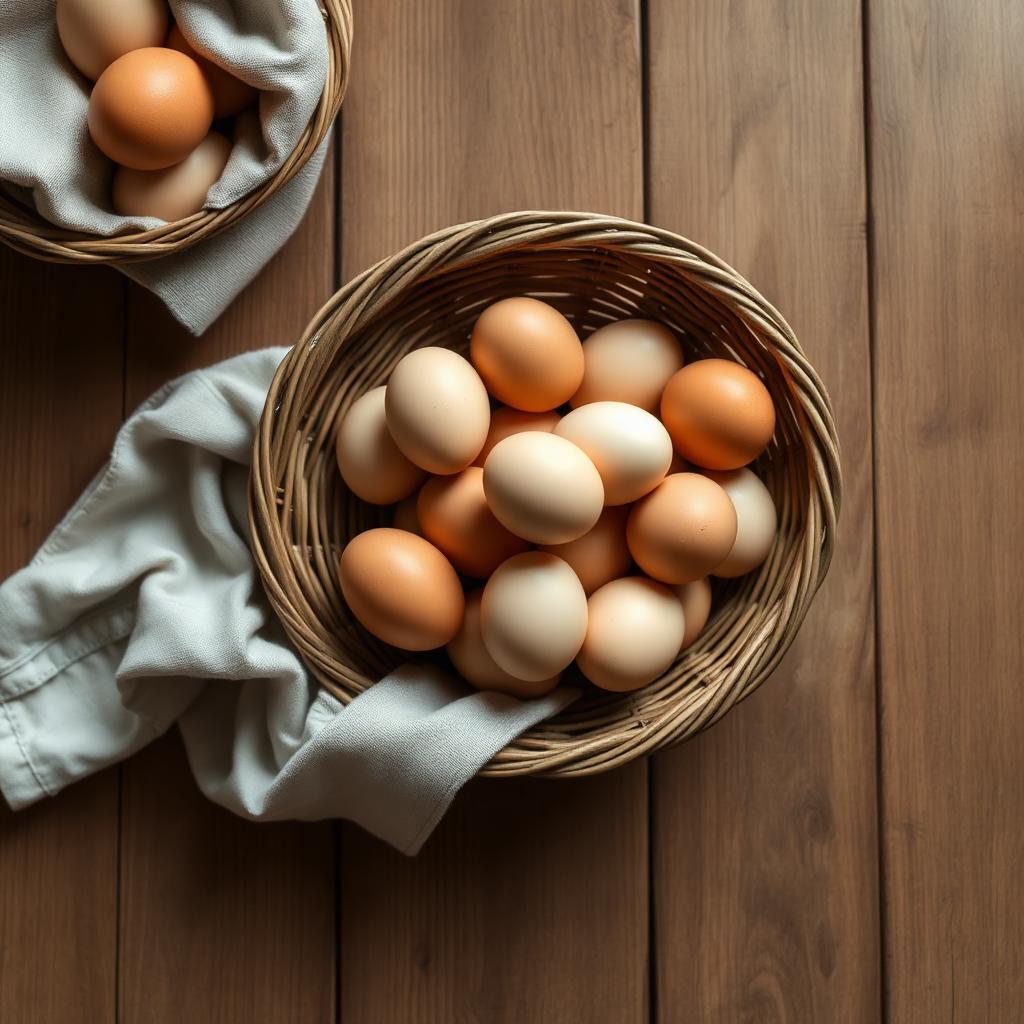
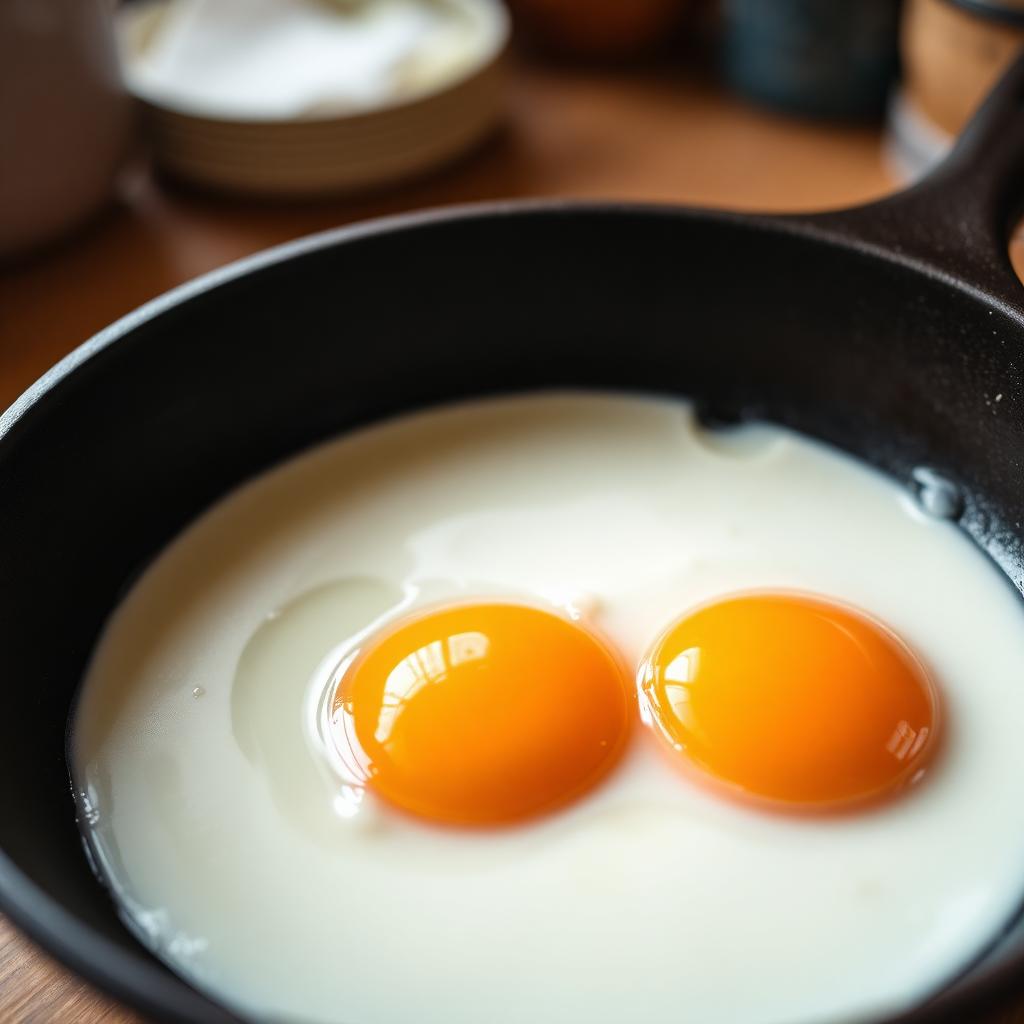
The easiest way to understand pastured eggs is to crack one next to a conventional egg. The yolk color, white structure, and flavor are all different, and those differences trace directly back to how the hen lived.
The yolk tells the story
Pastured hens eat grass, clover, bugs, and seeds. Those foods contain carotenoids that darken the yolk from pale yellow to deep orange. Store hens eat a controlled diet of corn and soy, which produces the lighter yolks most shoppers are used to.
The white stands taller
A fresh pastured egg has a thick white that holds its shape in the pan. Older or mass-produced eggs often have watery whites that spread across the skillet. That structure matters for poaching, frying, and baking.
Nutrition differences
Studies on pastured eggs have found higher levels of vitamins A, D, and E, more omega-3 fatty acids, and more lutein and zeaxanthin. The exact numbers vary by season and diet, but the overall pattern is consistent: hens on pasture produce more nutrient-dense eggs.
Seasonal shifts are honest
In late spring and summer, our yolks are darkest because the pasture is lush. In winter, they lighten as the hens rely more on grain. That variation is normal and proves the hens are actually eating what is growing outside.
Try the test yourself
Buy a dozen of our farm eggs and a dozen store eggs. Fry one of each in the same pan. The color, texture, and flavor differences speak for themselves. You can order pastured eggs for pickup at our farm in Conway, PA.