The first time you fill out a cutting sheet it can feel like a test you did not study for. It is not. There are five main sections of a hog, and once you know them the choices make sense.
The shoulder
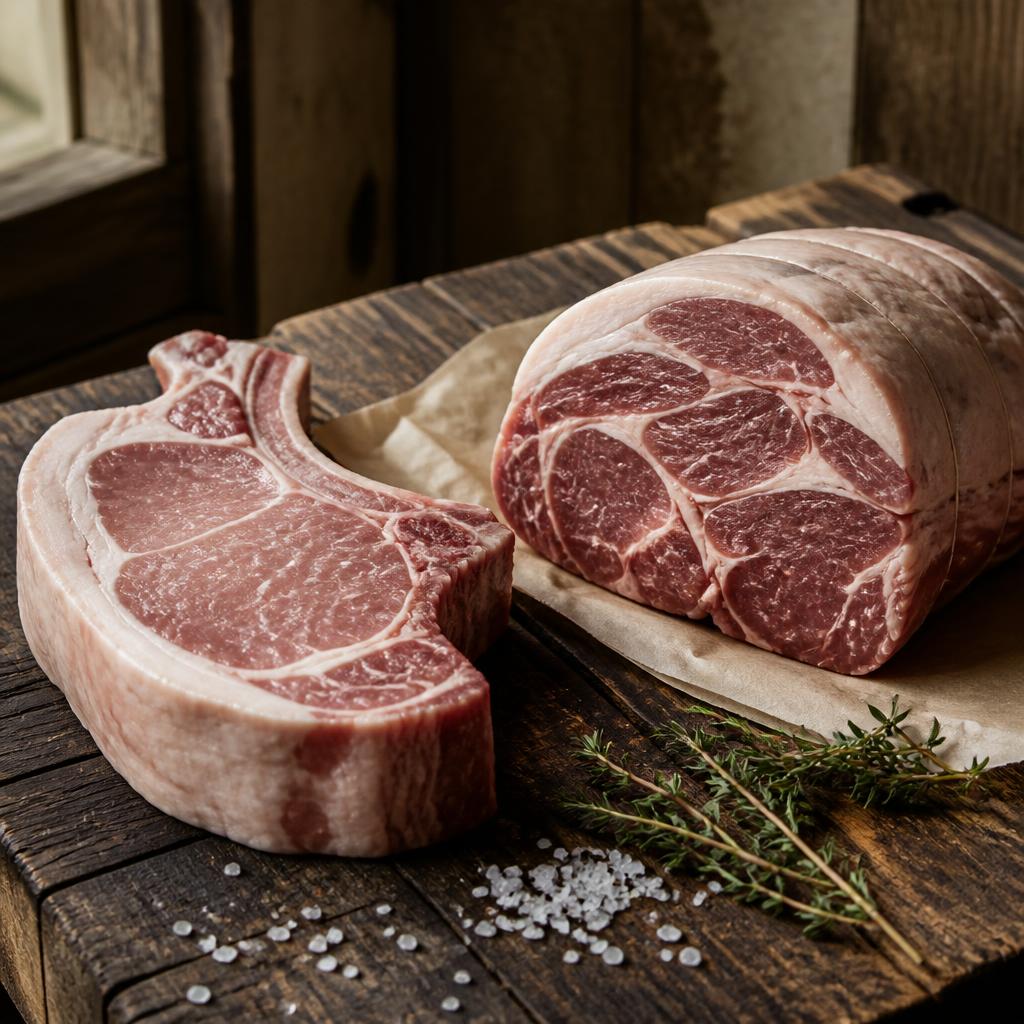
The front end of the hog gives you the picnic shoulder and the Boston butt. This is the hardest working muscle on the animal, which means tough connective tissue that turns silky with long, slow cooking.
**Best for:** pulled pork, carnitas, stew, and ground sausage.
The loin
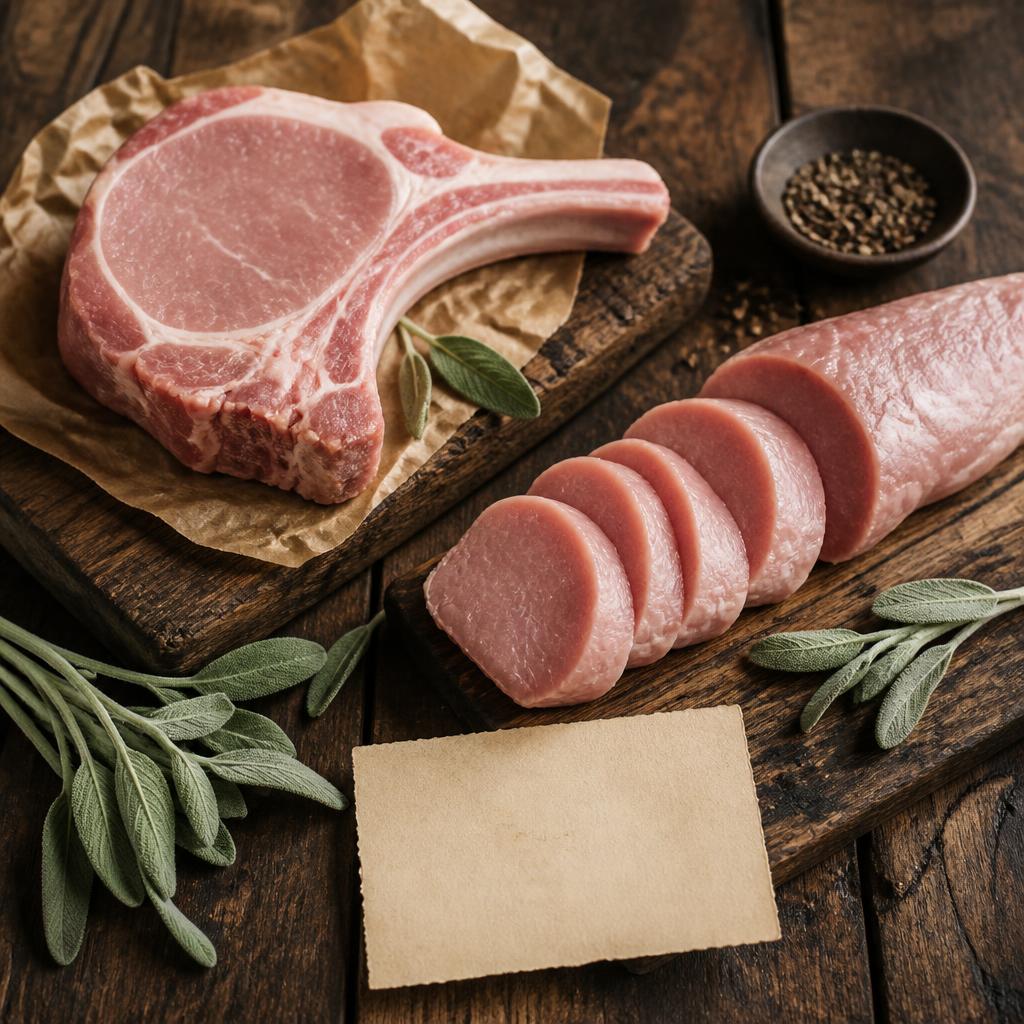
The loin runs along the back and produces pork chops, loin roasts, and tenderloin. It is the leanest section, so it cooks fast and dries out fast.
**Ask for:** chops cut at least one and a quarter inches thick. Thin chops are the number one reason people think they do not like pork.
The belly
Belly becomes bacon, or you can keep it fresh for roasting or making pork belly burnt ends. If you want bacon, you also need to decide on cure and smoke, which the processor handles.
**Ask for:** thick sliced if you like bacon that stands up in a cast iron pan.
The ham
The back leg is the ham. You can take it fresh as a roast, cured and smoked as a traditional ham, or cut into ham steaks. Half hams are easier to cook for smaller families than a full leg.
The extras
A simple starter sheet
If you are overwhelmed, this is a good default for a half hog:
Reserve a share
Our pork shares are limited each season. Reserve on the pork page and we will walk you through the cutting sheet before your hog goes to the butcher.