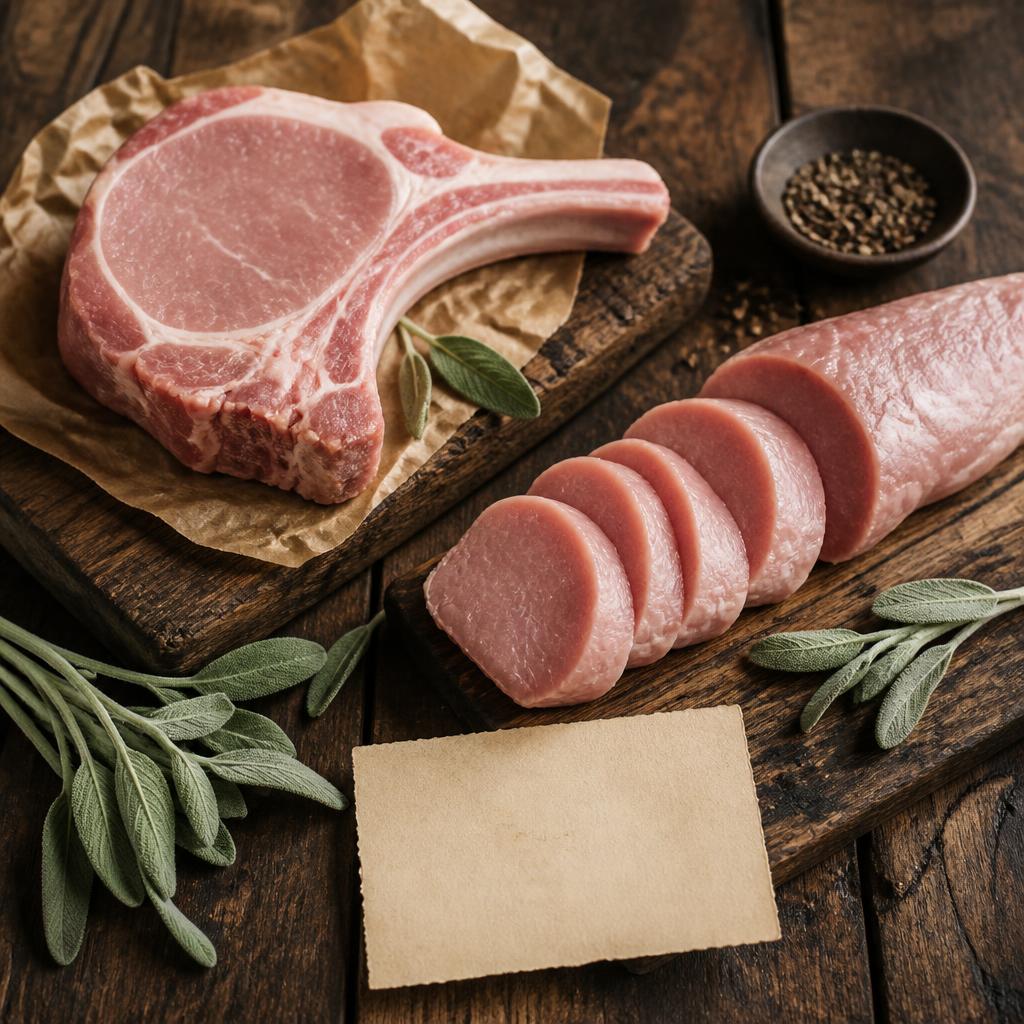
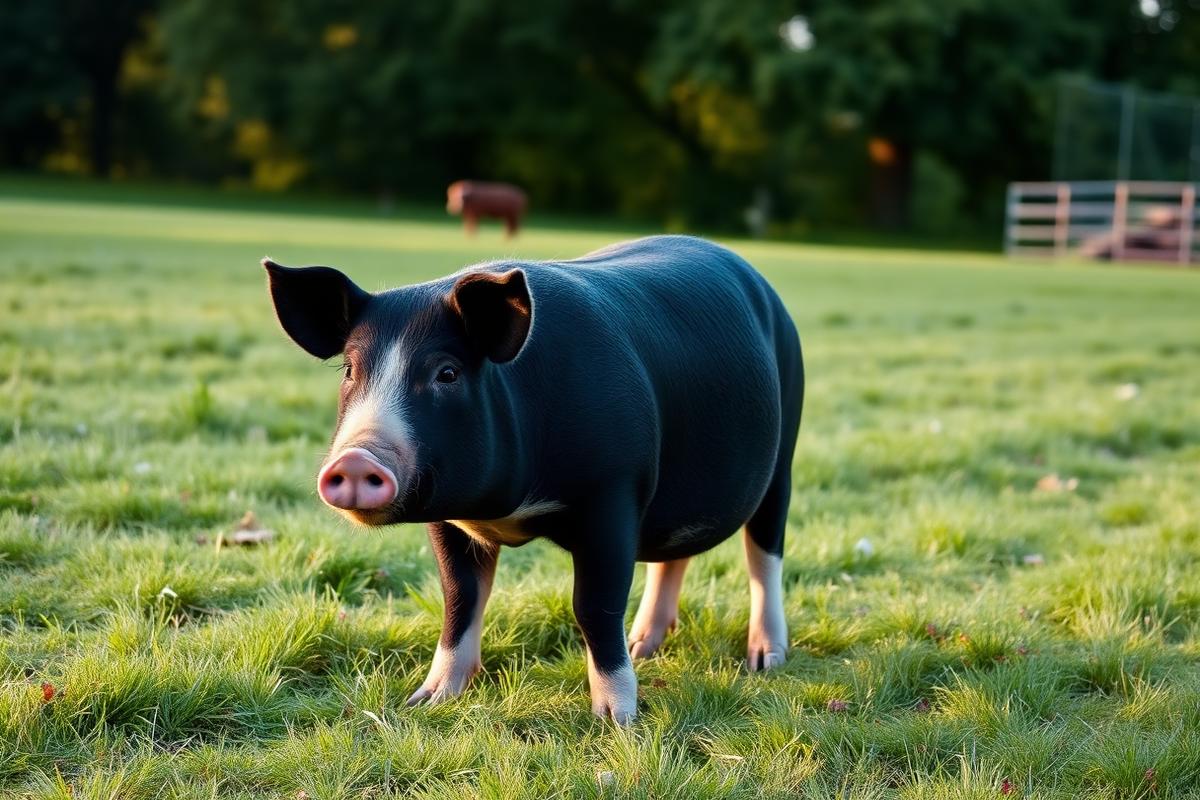
Berkshire pork is often called the Wagyu of pork, and the comparison is not just marketing. The meat is visibly darker, more heavily marbled, and carries a richer flavor than the pale commodity pork found in most supermarkets.
Why Berkshire looks different
Berkshire hogs carry more intramuscular fat, the fine white lines that run through the meat. That fat melts during cooking, basting the meat from the inside and keeping it juicy. Grocery pork is usually bred to be ultra-lean, which dries out fast and has less flavor.
The flavor is deeper
Berkshire fat has a lower melting point and a sweeter profile. That means the meat tastes richer even with minimal seasoning. A Berkshire chop needs only salt, pepper, and a hot pan.
How it cooks
Because Berkshire pork is fattier, it is more forgiving. It stays moist at higher temperatures and works well for grilling, roasting, and braising. The shoulder breaks down beautifully for pulled pork, and the belly makes exceptional bacon.
Why it costs more
Berkshire hogs grow more slowly and produce smaller litters than commercial breeds. They also require more time and space to reach market weight. The result is a higher cost per pound, but most customers find the eating quality justifies the price.
Where to buy Berkshire pork near Beaver County, PA
We raise Berkshire and Blue Butt heritage hogs on pasture at Bryant Creek Heights in Conway, PA. Our pork is sold direct to customers with pickup at the farm. Check our pork page for current cuts and availability.